Pilates is a system of exercise with a fascinating history, and it is winning people over all around the world. Yet it is far more than a trend: behind Pilates lies a rich history, a precise philosophy of movement and a growing body of scientific research confirming its health benefits. Let us explore why this form of exercise deserves a place in your life.
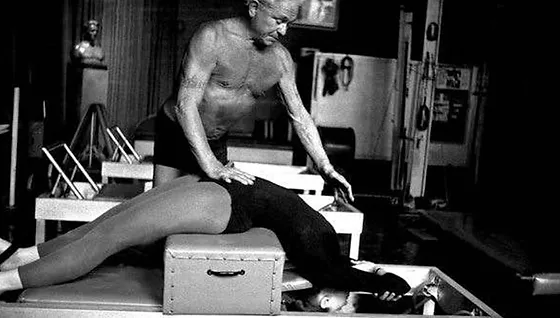
Joseph Pilates, the creator of the method, was born in Germany in 1883. From childhood he struggled with a range of ailments, including asthma, rickets and rheumatic fever. In pursuit of better health, he began experimenting with many forms of physical activity, such as yoga, gymnastics, boxing and martial arts. These experiences allowed him to develop a holistic approach to movement that combined precision with flow and concentration.

Joseph Pilates did not only create a revolutionary method of exercise; he also introduced numerous technical innovations that transformed the world of rehabilitation and functional training. His ideas for equipment and methodology were ahead of their time, and their influence can still be seen today.
During the First World War, while held in an internment camp in Great Britain, Pilates devised sets of exercises for hospital patients, using the springs from hospital beds. It was this moment that gave rise to the first prototype of the Reformer, one of the most important pieces of equipment in the Pilates method.

The Reformer is a moving carriage fitted with springs of varying tension, allowing exercises to be performed smoothly and with control. Thanks to its guide rails and resistance system, users could strengthen their muscles without putting strain on their joints. This apparatus made Pilates a method that was both strengthening and rehabilitative, used by athletes, dancers and people recovering from injury. With the Reformer, every movement could be mindful and precisely controlled, enabling effective work on strength, flexibility and coordination.

Pilates continued to develop his ideas, creating further apparatus, including the legendary Cadillac. This was a large, stable table with bars, straps and springs mounted above it, making it possible to perform a wide range of exercises both for healthy people and for those in need of rehabilitation. The Cadillac allowed movement to be guided with precision, building muscular strength, control and flexibility.

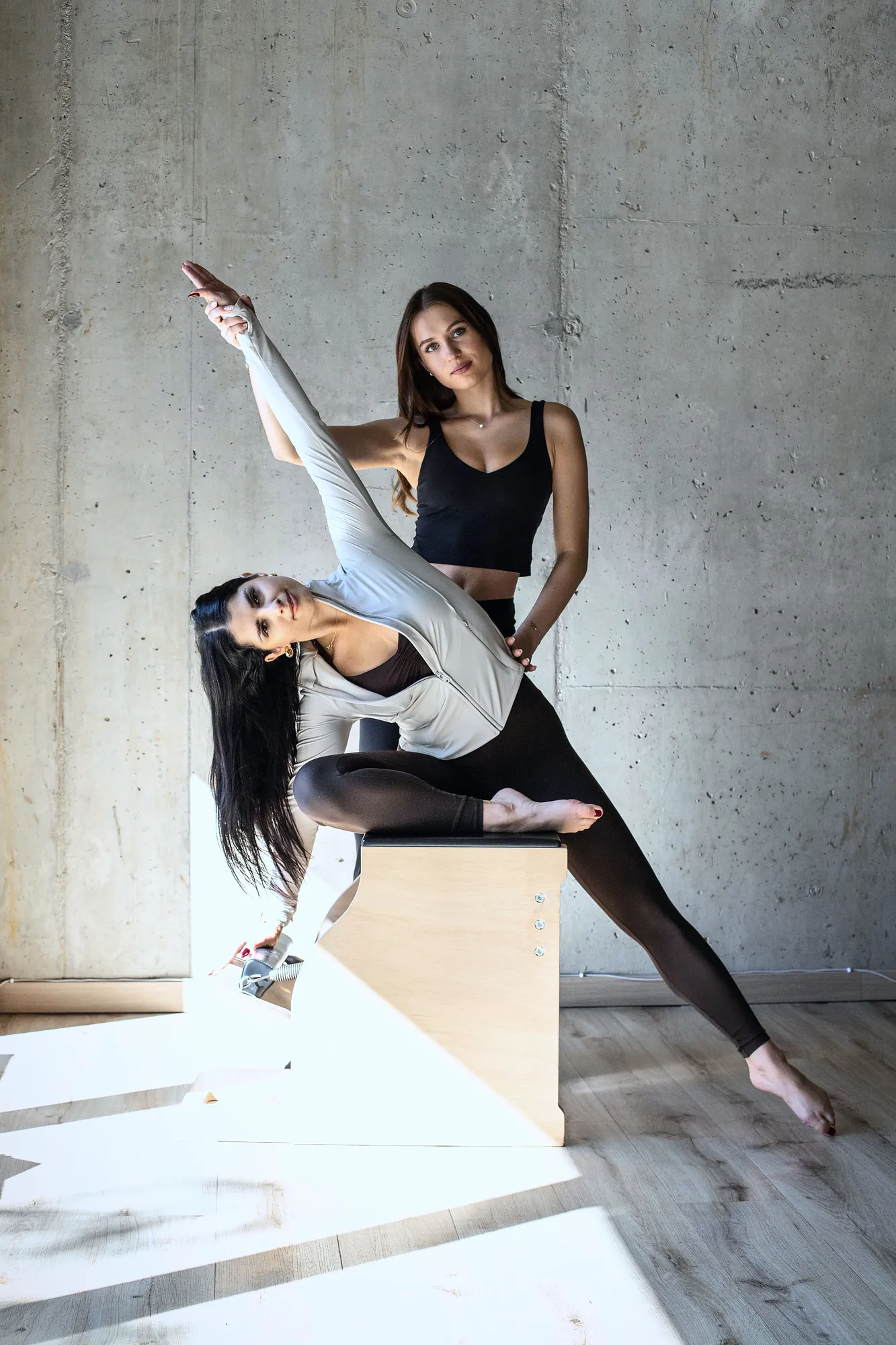
Pilates recognised that the body should be prepared for the functional movements we perform every day. To this end, he created the Wunda Chair, a compact yet versatile piece of apparatus that allowed exercises to be performed seated, standing and lying down. Its spring system made it possible both to strengthen the deep muscles and to work on balance and stability.

To care for the spine and the mobility of the chest, Pilates designed the Barrels, barrels of different sizes that helped with stretching and improving posture. The Spine Corrector, one of his most innovative pieces of apparatus, was designed to strengthen the back muscles and correct faulty movement patterns.
“You are only as young as your spine is flexible”, Pilates insisted, underlining the importance of working on the mobility and health of the spine.
%20w%20Pilango%20Pilates%20Studio.jpg)

Pilates did not limit himself to creating equipment; he also developed a unique methodology of exercise. His system was based on six key principles:
As Pilates himself used to say: “Breathing is the first act of life, and the last. Our very life depends on it. Since we cannot live without breathing, it is tragically deplorable to contemplate the millions and millions who have never learned to master the art of correct breathing.” Every exercise should be performed with full focus on the breath and complete commitment, which leads to a lasting physiological transformation.
When Joseph Pilates died in 1967, his legacy could easily have been forgotten or diluted among the many interpretations of his method. Among his students, however, was one person who not only faithfully preserved the original principles of Pilates but also adapted them to the realities of the modern world: Romana Kryzanowska.
Romana Kryzanowska, a Polish-American dancer and teacher, met Joseph Pilates in her youth. She was just 17 when an injury brought her to his studio in New York. Joseph and his wife Clara, known for their unconventional yet remarkably effective approach to working with the body, quickly saw in her not only a promising student but also a future guardian of their work. “You can describe Pilates in three words: Stretch, Strength and Control. And control is the most important, because it means you are using your mind.” – this is one of Romana’s best-known quotes.

After Joseph Pilates’ death in 1967, many people tried to interpret his method in their own way. Some added elements of yoga, while others blended in contemporary fitness techniques. Romana Kryzanowska, however, stood guard over “authentic Pilates”: the classical method she had been taught by its creator himself. At the same time, she was aware that the world was changing. Pilates, originally designed for dancers and athletes, needed to find its place in a broader context, as a method accessible to everyone. It was Romana who opened it up to the modern world.

In the 1970s and 1980s, as fitness culture entered its golden age, Kryzanowska set out on a mission to popularise the classical Pilates method. As director of the Pilates studio in New York, she began training instructors and introduced a structured teaching programme. Under her watchful eye, Pilates became accessible not only to dancers but also to everyday people: office workers, older adults and those recovering from injury.
Romana Kryzanowska was renowned for her exceptional discipline and precision. She said that every movement in Pilates should have its purpose and meaning. Her students recall that she could spend hours refining the smallest details: the placement of a foot, the direction of the gaze, the rhythm of the breath. She could not abide carelessness or mediocrity. In her view, Pilates demanded complete commitment of mind, body and spirit.
Thanks to Romana Kryzanowska, classical Pilates survived while also becoming more approachable for people today. To this day, many instructors cite her teachings and regard her as the most important figure in the history of the method after Joseph Pilates himself.
Her students, such as Sean Gallagher and Sari Mejia Santo (her daughter), continue her work, and the Pilates method, still true to its roots, is practised all over the world. Thanks to her, this art of movement has endured, uniting the classical with the modern, the past with the future, and tradition with evolution.

In recent years, scientific research has confirmed what Pilates practitioners have known for decades: regular practice brings numerous health benefits. Here are some of the areas in which Pilates stands out from other forms of physical activity:
In recent years, Pilates has evolved, embracing new technologies and approaches. Hybrid forms of Pilates are emerging, such as aerial Pilates and trampoline Pilates, which combine the traditional principles with modern fitness elements. At the same time, research into biomechanics and the neuroplasticity of movement suggests that Pilates may help improve motor skills and movement memory, which is particularly promising in work with older adults and people with neurodegenerative conditions.

Pilates is more than exercise; it is a complete philosophy of caring for body and mind. With regular practice you can find harmony, strengthen your body, improve your posture and gain a sense of inner calm. It is a universal method, suitable for young and old alike, for healthy people and for those in rehabilitation.
As Joseph Pilates used to say: "You are only as young as your spine is flexible." If you are looking for an activity that brings long-term health benefits and helps you get to know your body better, Pilates is an excellent choice.
We warmly invite you to Pilango Pilates Studio in Wrocław, where you can experience all of these benefits for yourself. Our studio is fully equipped with the legendary Contrology by Balanced Body apparatus, which allows exercises to be performed precisely and safely, ensuring optimal results. We look forward to welcoming you and discovering the power of mindful movement and breath together!
Book your class at Pilango today!