Mat Pilates is one of the most versatile forms of the method, designed to improve strength, flexibility, posture and body awareness. While at first glance it may seem less demanding than working on specialised apparatus, Mat sessions offer unique benefits and are a true test of our skills and progress.
Why practise Pilates on the Mat?
Mat work uses nothing but your own body weight, which demands complete control, precision and concentration. This form of training helps you:
Strengthen your deep muscles, which are responsible for stabilising the spine and maintaining good posture.
Improve flexibility and range of motion, which translates into moving better in everyday life.
Work on balance and coordination, deepening your body awareness.
Gain feedback about your body that you can take into your work on the apparatus.
At Pilango we often say that Mat sessions, where we work with body weight alone, give us feedback for our further work on the apparatus. The Mat is a true test and a clear picture of our progress.
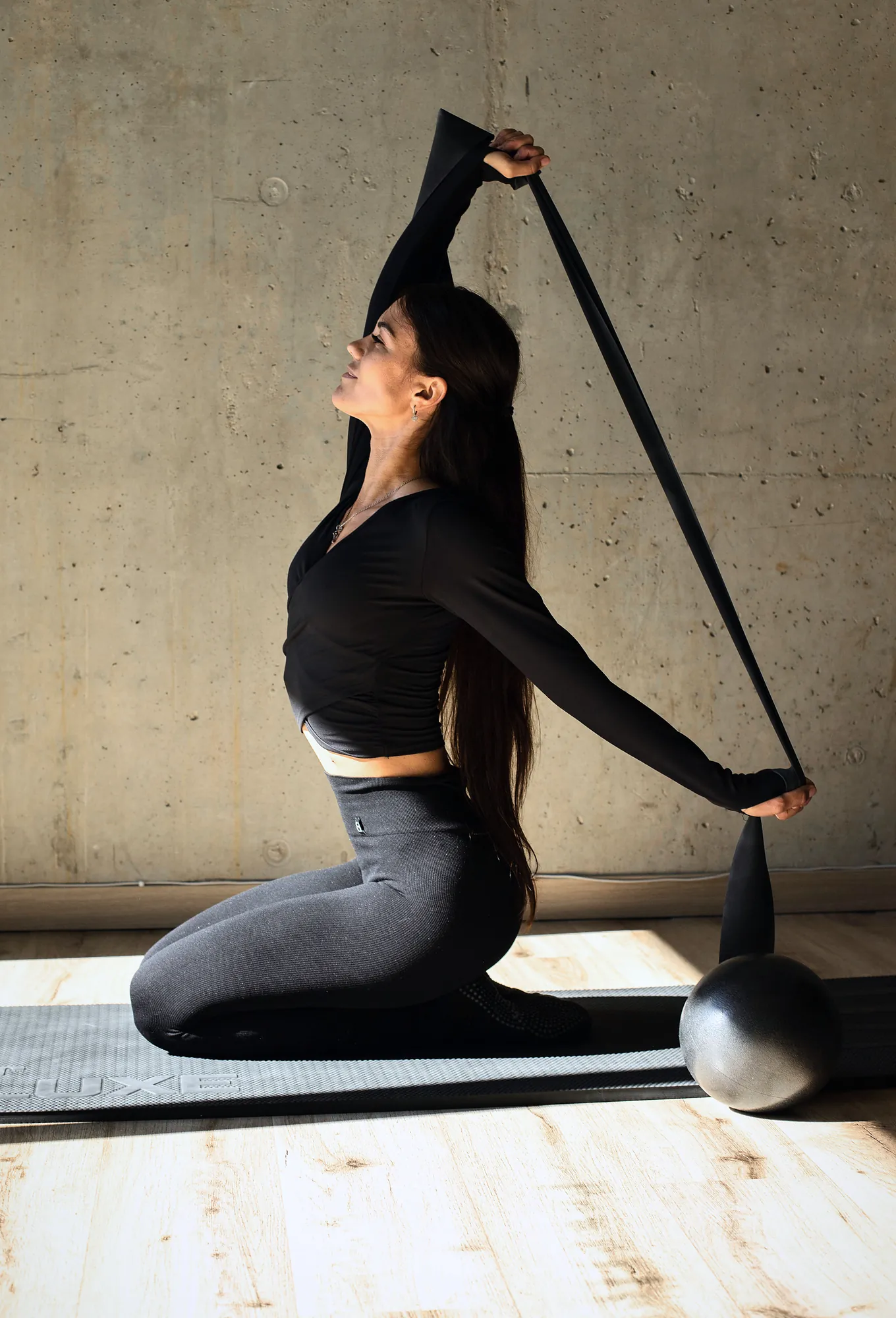
Anastazja demonstrating the Teaser on the Mat at Pilango Pilates Studio
Classical Mat Pilates – the Joseph Pilates method
At Pilango Pilates Studio, Mat sessions follow the classical order – the sequence of exercises devised by Joseph Pilates. This system of movement was designed to strengthen the body as fully as possible, improve its flexibility and teach precise control.
To tailor each session to the individual needs of participants, however, our instructors introduce modifications and use small props such as:
Magic Circle: Excellent for building strength in the arms, shoulders and inner thighs.
Hand weights: Ideal for improving upper-body strength.
Balls and weights: Used to increase the intensity of the exercises and to work on stability.
These props not only add variety to the workout but also make it more effective, helping to focus on specific muscle groups.
Examples of Mat Pilates exercises
Here are a few classical Mat exercises that form the foundation of the Pilates method, along with their benefits:
The Hundred: A warm-up that activates the abdominal muscles, boosts circulation and strengthens the centre of the body. It involves lifting the legs and upper body while pumping the arms.
Benefits: Strengthens the abdominals, improves endurance and prepares the body for the exercises that follow.
Roll-Up: An exercise in which the body rolls up from lying to sitting and back down again.
Benefits: Strengthens the abdominals, improves spinal flexibility and teaches control of movement.
Leg Circles: Performed with one leg raised vertically while the other rests on the Mat. The raised leg draws circles in the air.
Benefits: Strengthens the abdominal and hip muscles and improves pelvic stability.
Teaser: A challenging exercise that calls for balance and control. The legs and torso are lifted to form a V shape.
Benefits: Builds abdominal strength and improves balance and coordination.
Spine Stretch: Sitting with the legs extended in front, you slowly stretch the spine forward.
Benefits: Improves spinal flexibility, releases tension in the back and teaches correct lengthening of the body.
The Mat – a test of strength and control
The Mat is where we come face to face with our own body and can check our progress. Exercises such as the Teaser are more demanding on the Mat than on the apparatus, because they require complete control and the strength of the deep muscles without any additional support. That is why, for example, the Teaser is harder on the Mat than on the Cadillac.
Mat Pilates at Pilango Pilates Studio
What can you expect from Mat Pilates classes at Pilango?
Mat Pilates classes at Pilango Pilates Studio involve:
Working on abdominal engagement and lengthening the spine.
Following the classical order of exercises, with modifications tailored to each participant's level.
Introducing props such as the Magic Circle, which enrich the workout and help you achieve better results.
Our instructors make sure that every participant understands the technique and can enjoy the full benefits of classical Pilates.
Combining the Mat and the apparatus – the key to more effective training
“Taking Mat classes in the studio, where we teach them according to the classical Pilates method, will let you see the difference on the apparatus. By coming to Pilango for both apparatus and Mat classes – all taught using the same method – you gain greater overall effectiveness in your training.”
Mat work complements training on the apparatus, while the apparatus helps you better understand and master the movements performed on the Mat. This combination ensures well-rounded progress and more effective exercise.
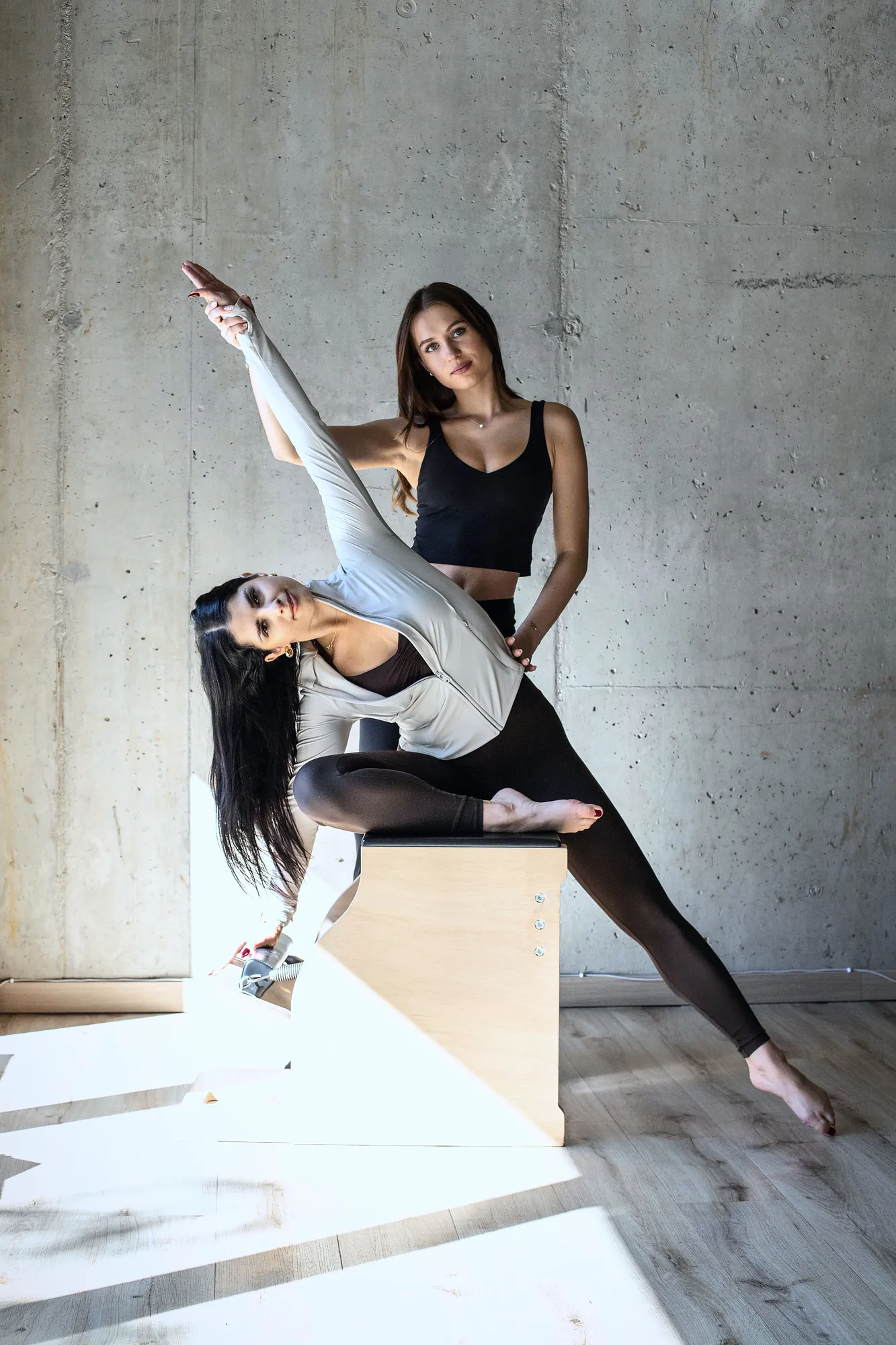
Wunda Chairs and mats at Pilango Pilates Studio on Księcia Witolda Street in Wrocław
Combining the Mat with the Wunda Chair
The Wunda Chair is a compact piece of apparatus that complements Mat exercises perfectly. Combining the Mat and the Chair opens up a wide variety of training options that strengthen the deep muscles, improve balance and increase flexibility.
1. Squats with a transition to the Mat
Description:
Lower into a squat with your hands resting on the handles of the Wunda Chair, then return to standing. Next, move into a front support on the Mat and hold a plank.
Benefits: Strengthens the legs, glutes and abdominals, and improves stability and balance.
2. Roll-back with the legs on the Chair
Description:
From sitting on the Mat with your feet on the Chair's pedal, roll the spine back. As you return to sitting, lift the pedal using the strength of your legs.
Benefits: Strengthens the abdominals and legs and improves spinal flexibility.
3. Plank with a transition to the Chair
Description:
Hold a plank on the Mat, then move your feet onto the Chair's pedal while keeping the body stable. Press the pedal down, then return to the Mat.
Benefits: Strengthens the abdominals, arms and legs, and improves balance.
4. Hip lifts on the Mat with support from the Chair
Description:
Lying on the Mat with your feet on the Chair's pedal, lift your hips. Lower them slowly and with control.
Benefits: Strengthens the glutes, lower back and thighs.
Pairing the Chair with the Mat lets you work in a variety of positions and engage the body dynamically.
Combining the Mat with the Spine Corrector
The Spine Corrector works perfectly alongside Mat exercises, helping to improve spinal mobility and overall flexibility. It is an excellent tool for stretching and strengthening the muscles of the back, hips and chest.
Example exercises:
1. Spine stretch with a transition to the Mat
Description:
Lie over the Spine Corrector with your arms and legs extended, then flow smoothly onto the Mat into a plank.
Benefits: Improves spinal flexibility and strengthens the abdominals and arms.
2. Bridge using the Spine Corrector
Description:
Lie on the Mat with your feet resting on top of the Spine Corrector. Lift your hips, then lower them slowly.
Benefits: Strengthens the glutes, legs and lower back.
3. Side bends with a transition to the Mat
Description:
Sit sideways on the Spine Corrector and bend the torso to the side, then move onto the Mat into a side plank.
Benefits: Stretches and strengthens the side muscles of the torso and improves balance.
Join us at Pilango Pilates Studio
Mat Pilates is a wonderful way to begin your Pilates journey or to complement your training on the apparatus. If you are looking for a place to practise in the spirit of the classical Pilates method under the guidance of experienced instructors, Pilango Pilates Studio is the perfect choice. We do everything we can to make every session not only effective but also truly rewarding. At Pilango, precision of movement meets the joy of taking care of yourself.